
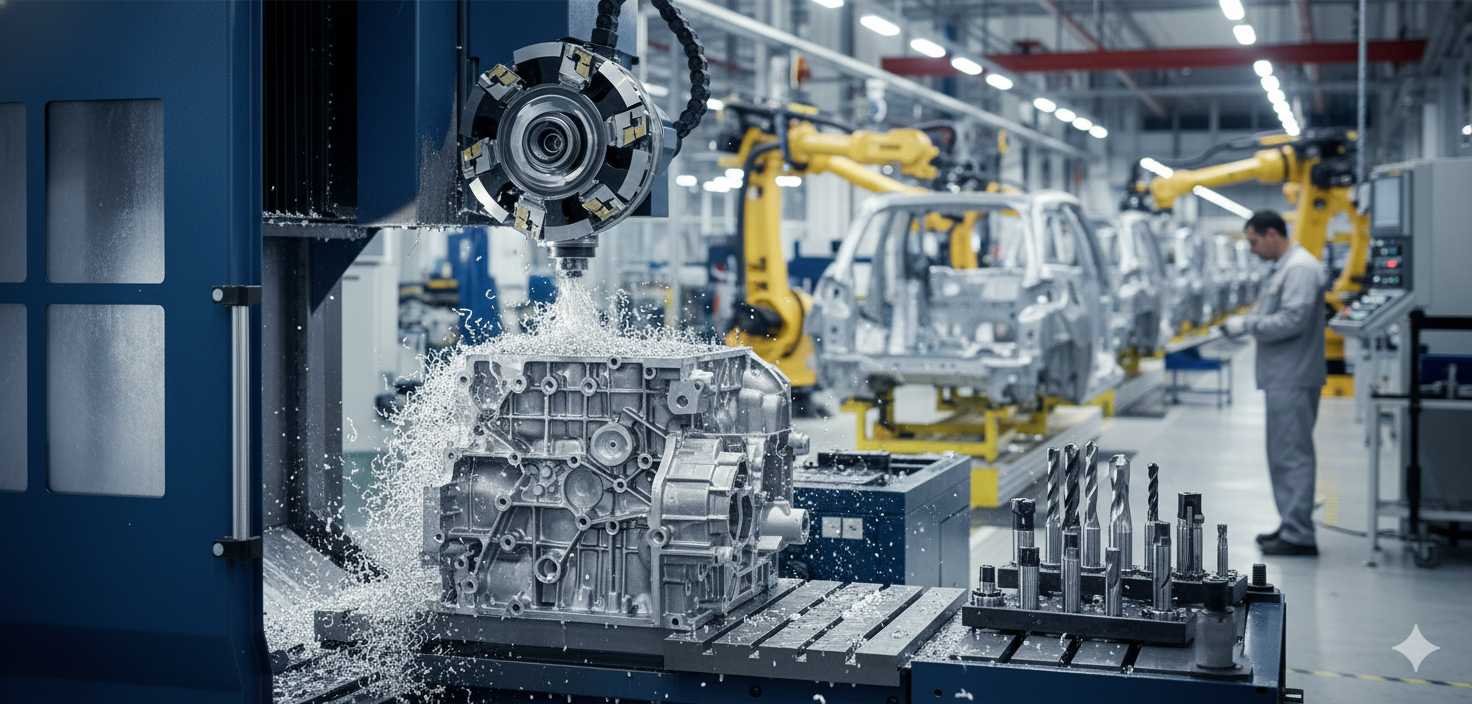
Procarb is a primary supplier to the Automotive industry, a sector defined by its high-volume production, stringent quality control, and the constant need for cost-effective manufacturing of diverse components, from engine parts and chassis to transmissions. This industry relies heavily on machining a broad range of materials, including high volumes of Steel (P), Cast Iron (K), and Non-Ferrous Alloys (N) (like aluminum for engine blocks and casings), as well as Hardened Materials (H) for gear and drive train components. Procarb supports this sector by providing integrated solutions that emphasize speed, wear resistance, and repeatable accuracy: ProTurn offers various grades, including CBN for finishing hardened steel and specialized Cermet inserts for achieving a superior surface finish on critical cylindrical components like axles and brake discs; ProMill provides solutions for High-Feed Milling on engine blocks and cylinder heads to achieve the high metal removal rates critical for reducing production cycle times; and the entire process is stabilized by ProGrip tool holders, which are engineered for Vibration Damping and High-Precision Collect Chunks to maintain stability, maximize tool life, and minimize machine downtime in the high-speed manufacturing environment.
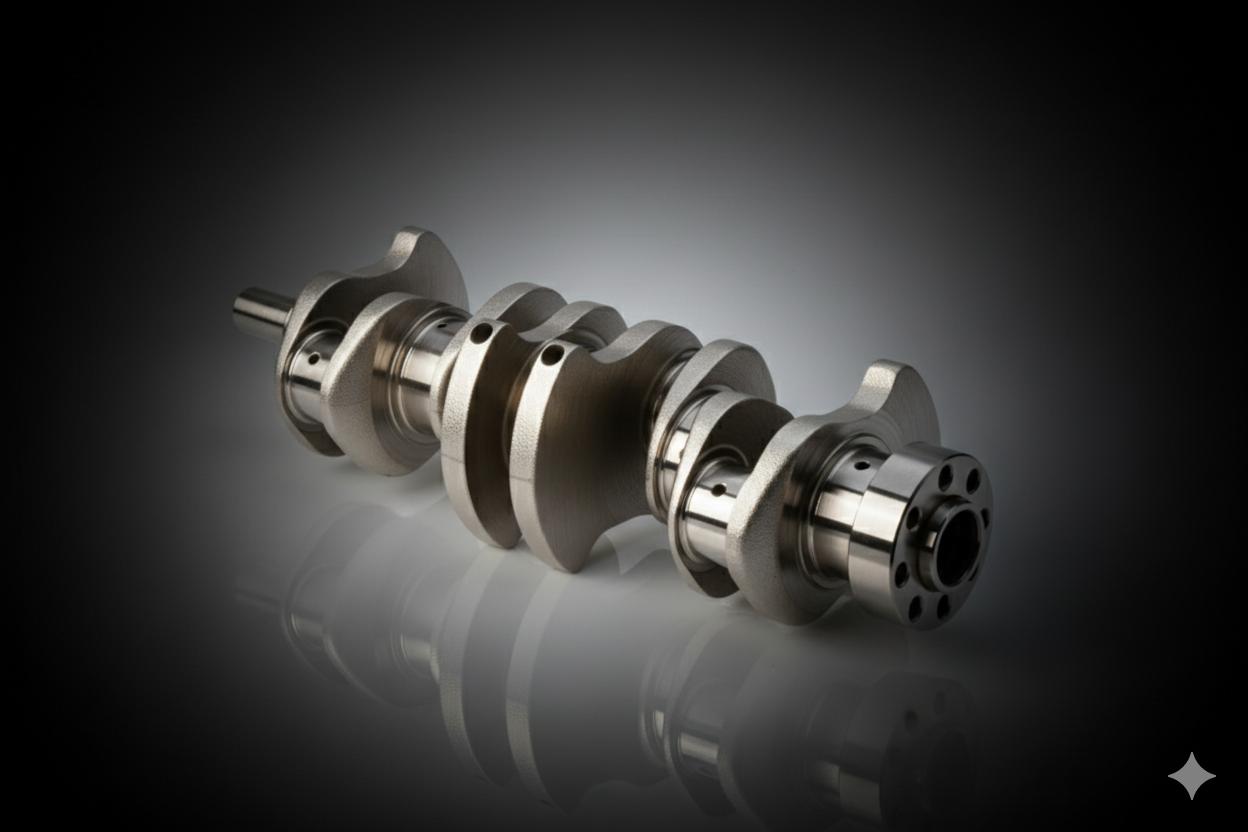
Crankshaft
The crankshaft is a crucial engine component responsible for transforming the reciprocating motion of the piston and connecting rod into rotational motion. It is typically manufactured from materials such as forged steel and ductile iron. The production process mainly involves operations like internal and external milling, turning, and drilling.
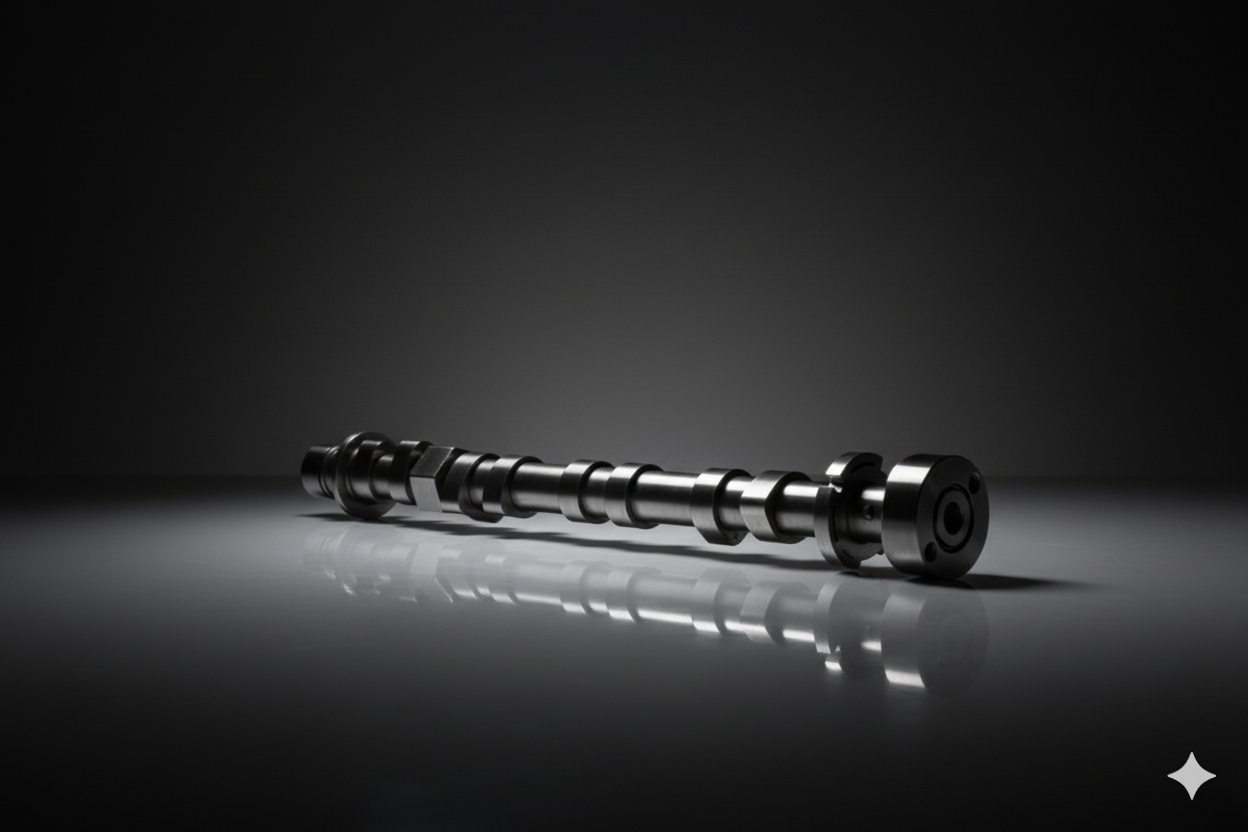
Camshaft
The camshaft plays a vital role in synchronizing the movement of the piston and valves within the engine cylinder. It is commonly manufactured from high-strength alloy steel or cast iron and undergoes key machining processes such as turning, slotting, and surface milling..
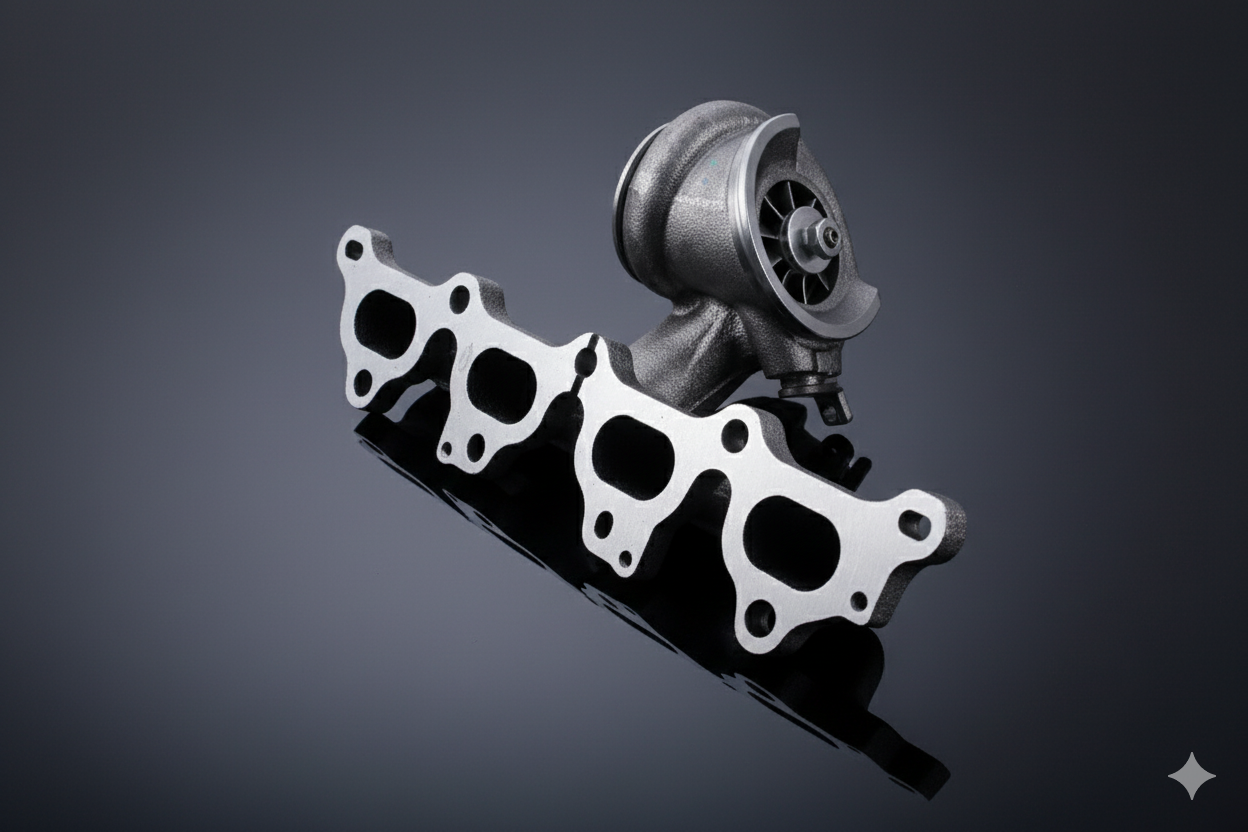
Turbocharger Exhaust Manifold
The turbocharger exhaust manifold is mounted on the engine cylinder block, where it gathers exhaust gases from each cylinder and channels them into the turbocharger system. Its primary purpose is to reduce exhaust resistance and avoid interference between cylinders. The main manufacturing processes include surface milling, drilling, special slotting, and other milling operations.
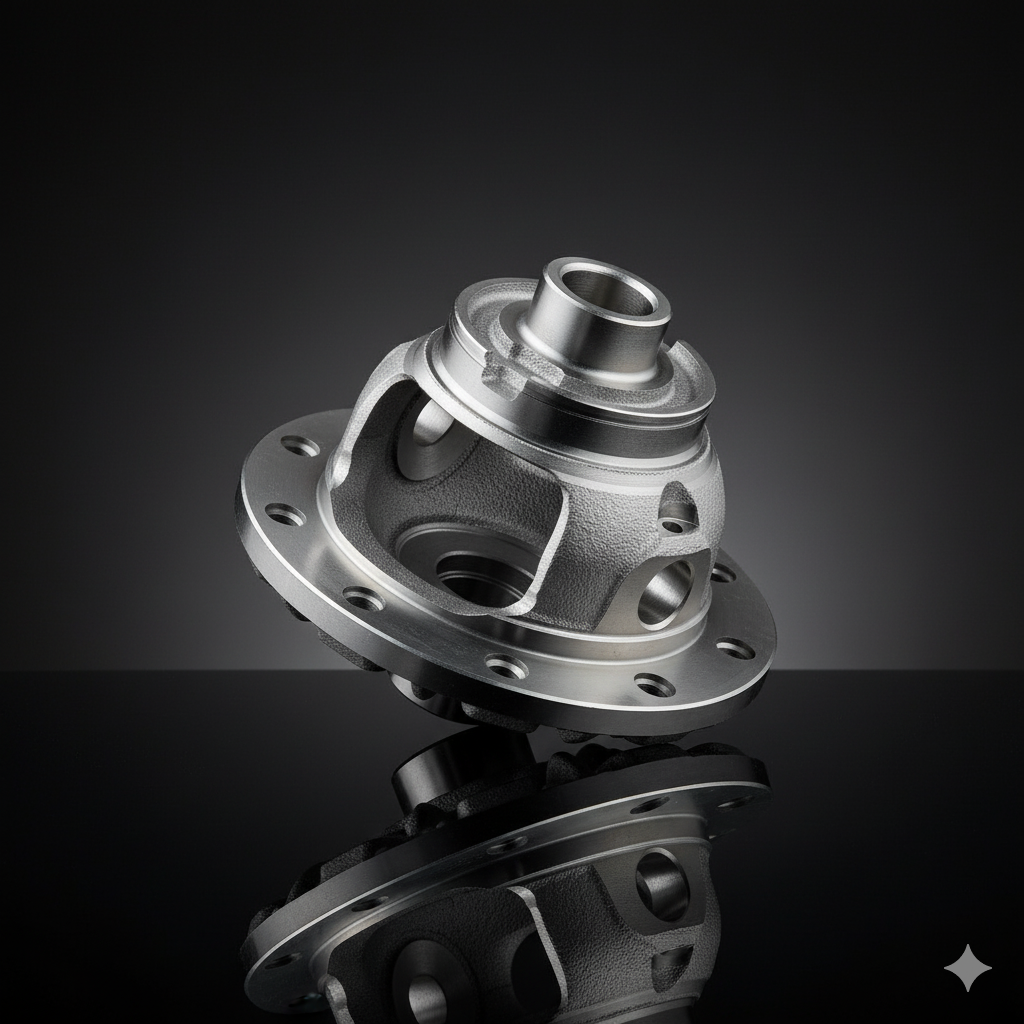
Differential Housing
The differential housing serves as the component that allows a vehicle’s left and right (or front and rear) drive wheels to rotate at varying speeds, ensuring smooth cornering and stable driving performance.